
If you are a business owner in the United States, your website is likely your most valuable employee. It works 24/7, handles sales, and defines your brand. But the technology powering that employee is changing rapidly.
WordPress development trends for 2026 and beyond are no longer just about aesthetic plugins or “Dark Mode.” We are witnessing a fundamental shift from WordPress as a simple blogging tool to WordPress as a Composable Digital Experience Platform (DXP).
Why does this matter? Because the strategies that worked in 2023, bloated page builders, generic themes, and reactive security, are becoming liabilities. To maintain search rankings and conversion rates, you need to understand the architectural shifts happening under the hood.
In this guide, NoorSoft Tech breaks down the high-impact trends that will define the web landscape in 2026, focusing on ROI, scalability, and user experience.
1. The AI-First WordPress Ecosystem (Beyond Content)
Artificial Intelligence is the buzzword of the decade, but for WordPress developers and business owners, the application is shifting from generative (writing blogs) to operative (running the business).
Automated Workflows & Code Generation
In 2026, AI will be deeply integrated into the development lifecycle. Tools like GitHub Copilot and CodeWP are allowing developers to write cleaner, more secure PHP and JavaScript snippets in half the time.
- Business Impact: Faster time-to-market for custom features and lower development costs.
AI-Driven Personalization for WooCommerce
Static product pages are dying. The new standard is hyper-personalization. AI plugins now analyze user behavior in real-time to dynamically change product layouts, pricing (dynamic pricing), and recommendations without human intervention.
- The NoorSoft Angle: We recommend using AI to automate “boring” tasks like image tagging and meta-description updates, freeing your team to focus on strategy.
2. Headless WordPress: The Enterprise Standard
If there is one trend dominating the conversation for high-traffic US businesses, it is Headless WordPress.
Why US Businesses are Decoupling
Traditionally, WordPress handles both the “body” (the database) and the “head” (the visual frontend). A Headless setup separates them. You keep WordPress for easy content management, but use advanced technologies like React, Next.js, or Gatsby to build the frontend.
Why make the switch?
- Speed: React-based sites load near-instantly.
- Security: Since the backend is separated from the frontend, your database is harder to hack.
- Scalability: You can push content to your website, a mobile app, and a smartwatch simultaneously.
The API-First Approach for Omnichannel
In 2026, your content needs to live everywhere. Headless WordPress uses the REST API or GraphQL to send data wherever your customers are. If you are running a multi-location business or a large eCommerce store, “going headless” is likely your highest ROI move.
3. The Maturity of Full Site Editing (FSE)
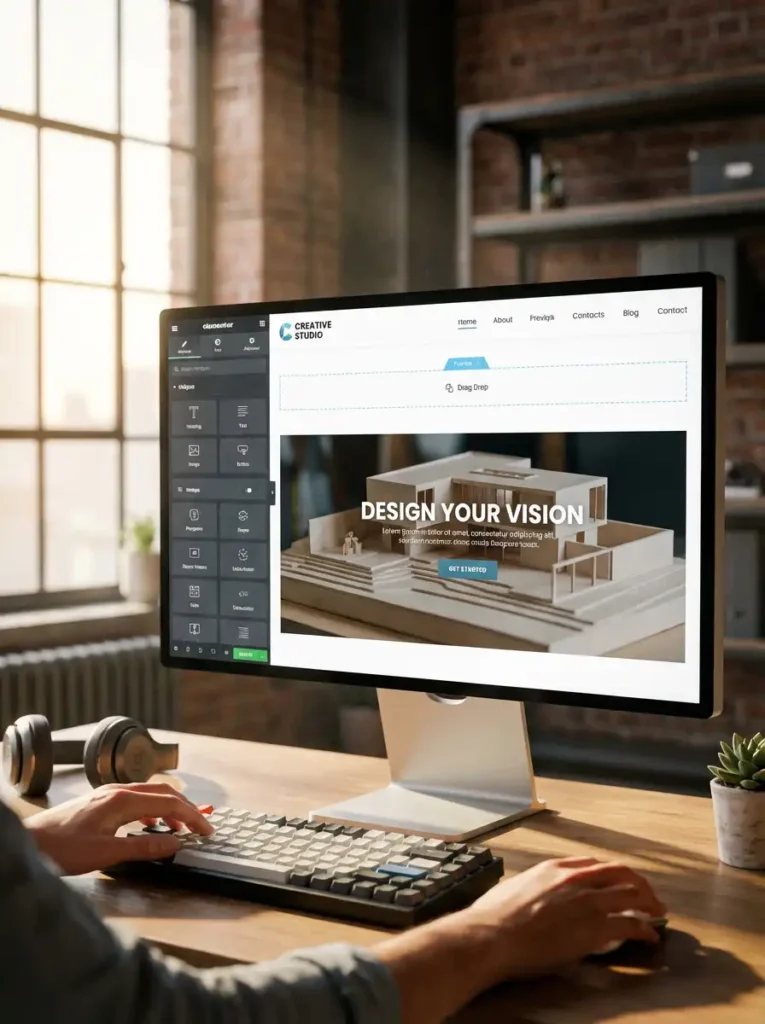
For years, business owners relied on page builders like Elementor, Divi, or WPBakery. While easy to use, they often add “code bloat” that slows down sites.
Saying Goodbye to Bloated Page Builders
The Gutenberg Block Editor has matured into Full Site Editing (FSE). This allows developers to edit headers, footers, and templates natively without heavy third-party plugins.
- The Shift: We are seeing a mass migration of legacy sites away from heavy builders toward lightweight, custom Gutenberg blocks.
- Benefit: Significantly higher Google PageSpeed scores, which directly correlates to lower ad costs and higher rankings.
Block Themes and Standardization
The “Twenty Twenty-Five” theme and beyond are establishing a standard where every element of a site is a “block.” This modularity means that if a design trend changes, you can update a single block type globally across your site rather than redesigning every page.
4. Performance & The Core Web Vitals Evolution
Google’s ranking algorithms are becoming ruthless regarding User Experience (UX).
Interaction to Next Paint (INP) Mastery
Google replaced “First Input Delay” with Interaction to Next Paint (INP). This metric measures how quickly your site responds when a user clicks a button.
- The Trend: Developers are now optimizing JavaScript execution to ensure that menus open instantly and “Add to Cart” buttons don’t lag. If your site feels “heavy,” your SEO will suffer in 2026.
Micro-Frontends Architecture
Instead of loading one giant stylesheet for the whole website, modern WordPress development loads only the CSS and JS needed for the specific blocks on the screen. This granular loading ensures mobile users on 4G networks still get a lightning-fast experience.
5. Security, Compliance & The “Trust” Economy

For US-based business owners, the legal landscape of the web is as important as the technical one.
ADA Compliance & Accessibility
Accessibility is no longer a “nice-to-have”; it is a legal safeguard. With a surge in lawsuits regarding the Americans with Disabilities Act (ADA), US businesses are prioritizing WCAG 2.2 compliance.
- Development Trend: Accessible-ready themes that support screen readers, keyboard navigation, and high-contrast modes out of the box.
Post-Cookie Data Strategies
With third-party cookies phasing out, WordPress sites are pivoting to First-Party Data collection. Developers are building custom CRM integrations directly into WordPress to capture lead data securely, ensuring you own your audience data rather than renting it from Facebook or Google.
6. Emerging Tech: The Interactivity API
A major update in WordPress core that is gaining traction is the Interactivity API.
Previously, if you wanted to update a shopping cart count or like a post, the whole page often had to reload. The Interactivity API standardizes a way for blocks to interact with users instantly, similar to how a mobile app feels.
Use Case:
- Instant search filtering for real estate listings.
- “Add to Compare” features on eCommerce sites that happen instantly.
- Calculators (Mortgage/ROI) that update as you type without lag.
Expert Insights: How to Future-Proof Your Build
A Note from the NoorSoft Tech Team:
“We often see business owners chasing trends that look cool but hurt performance (like heavy video backgrounds). The smartest investment for 2026 is infrastructure.
Don’t just ask your developer for a new design. Ask them: ‘Is this build Headless-ready?’ and ‘How does this stack up against INP metrics?’
The future of WordPress isn’t about plugins; it’s about custom, lightweight integrations that connect your website to your CRM, ERP, and AI tools seamlessly.”
Frequently Asked Questions (FAQs)
Is WordPress still a good choice for enterprise businesses in 2026?
Yes. With the adoption of Headless architectures and enterprise-grade hosting (like WP Engine or Kinsta), WordPress powers over 43% of the web, including major brands like Sony, Time Magazine, and Disney.
What is the biggest difference between Headless WordPress and traditional WordPress?
Traditional WordPress couples the frontend (what you see) with the backend (management). Headless separates them. This allows you to use faster technologies (like React) for the frontend while keeping the easy WordPress dashboard for content editing.
Do I need to switch from Elementor to Gutenberg?
It is highly recommended. While Elementor is user-friendly, it adds significant code weight. Migrating to native Gutenberg blocks can improve site speed by 30-50%, boosting your SEO and user retention.
How does AI affect WordPress security?
AI is a double-edged sword. Hackers use AI to find vulnerabilities, but developers use AI-driven security plugins (like Wordfence or Sucuri) to predict and block attacks in real-time.
Why is ADA compliance a development trend?
It is a legal and ethical necessity. In the US, websites are considered “places of public accommodation.” Non-compliant sites risk lawsuits. Accessibility also improves SEO and opens your market to the 15% of the population with disabilities.
What is the Interactivity API?
It is a standardized way for WordPress blocks to share data and react to user actions instantly (like clicking a button) without reloading the page, creating a smoother, app-like experience.
Conclusion
The WordPress development trends for 2026 clearly point toward a more professional, secure, and high-performance web. The days of installing 50 plugins and hoping for the best are over.
To succeed, US business owners must embrace Headless architectures for speed, AI for operational efficiency, and Accessibility for legal safety.
At NoorSoft Tech, we specialize in navigating these complexities. We don’t just build websites; we build future-proof digital assets designed to scale.
Ready to upgrade your web presence for 2026? Contact NoorSoft Tech today for a strategic consultation.